

Planning & Resources
A Simple Approach to Comprehensive End-of-Life Planning
Whether you are planning for end-of-life care decades in advance, planning for imminent care, or you and your family need our services now, we are here to answer any questions and guide you through this difficult time. We Are Here 24/7.
If a death is unexpected, please call 911. Emergency services will arrive, assess the situation, and notify the County coroner. At this time, please contact Endswell by calling 919-907-9777 or completing our Make Arrangements Now form.
If death is expected soon and your loved one is at home or in the hospital, please inform hospice, your social worker, or your nurse about the family’s end-of-life plan. Let everyone involved know that you have chosen Endswell Funeral Home, so they can keep us informed. We will be ready to take your loved one into our care.
When a death occurs, please call us directly and we will be here to answer any questions and help in any way we can, at any hour.
Endswell offers aquamation, cremation, and green burial. We take care of every aspect of the process. At Endswell, there is no upselling, no hidden fees, and nothing unexpected.
We do not pressure you with pre-need contracts. However, we are here to help you plan your arrangements in advance so you and your family know that everything will be taken care of at the time of death. Planning ahead unburdens loved ones from additional stress and gives families the opportunity to focus on what matters.
Losing a loved one can feel paralyzing. Endswell is here to answer any questions and help you plan and prepare both before and after the death occurs.
Funeral Preplanning & End-of-Life Planning: A Comprehensive Guide
1. Introduction: Why Preplanning Matters
Preplanning your funeral and broader end-of-life arrangements is a caring act for both you and your loved ones. By organizing these details ahead of time, you reduce emotional strain and financial uncertainty for your family. This guide will walk you through each step of the process, from exploring service options to outlining your wishes in a Will, ensuring that your final farewell reflects your values and priorities.
2. Educate Yourself About Service Options
Understanding available funeral or memorial service types helps you create arrangements that best honor your beliefs, cultural traditions, and personal preferences. Common service styles include:
- Traditional Funeral
- Typically involves a viewing or visitation, followed by a formal ceremony (religious or secular) and a procession to the burial site.
- Often includes embalming, a casket, floral arrangements, and coordinated funeral home services.
- Provides a structured setting for community support and shared mourning.
- Memorial Service
- Usually held after the burial, cremation, or other form of disposition.
- The deceased’s body is often not present; instead, it can include an urn or photographs.
- Allows for greater flexibility in timing and location, enabling loved ones to gather when they can.
- Celebration of Life
- Focuses on remembering personal stories, achievements, and the personality of the deceased.
- May be less formal, with unique elements such as favorite music, themed decor, or casual gatherings.
- Emphasizes a positive, uplifting approach to remembrance.
- Green or Eco-Friendly Services
- Prioritizes minimal environmental impact by using biodegradable caskets or shrouds.
- Some individuals choose natural burial grounds that avoid chemical embalming.
- Ideal for those with a strong commitment to environmental stewardship.
By educating yourself about these different service styles, you can tailor your arrangements to your values, cultural background, and family dynamics.
3. Choosing a Method of Disposition
The method of disposition is a crucial component of funeral preplanning. Each option has practical, financial, and environmental considerations.
- Burial
- Traditional In-Ground Burial: Involves placing a casket into a grave, often marked with a headstone or grave marker.
- Mausoleum or Crypt Entombment: Above-ground placement within a communal or private mausoleum.
- Costs & Considerations: Plot purchase, grave opening/closing, perpetual care fees, headstone or marker costs.
- Cremation
- Direct Cremation: Occurs soon after death without a formal viewing; often followed by a memorial service later.
- Traditional Cremation: May include embalming, a visitation, and a service prior to cremation.
- Options for Ashes: Burial, inurnment in a columbarium, scattering, or keeping the urn at home.
- Green/Natural Burial
- Focuses on returning the body to the earth with minimal ecological disruption.
- Often uses biodegradable containers or simple burial shrouds.
- Typically does not involve embalming or non-biodegradable materials.
- Aquamation (Alkaline Hydrolysis)
- Also called “water cremation” or “flameless cremation,” it uses a water-based solution and elevated temperature to break down remains.
- Environmentally friendly alternative that produces less carbon emissions than traditional cremation.
- Results in remains that can be returned to loved ones, similar to conventional cremated ashes.
- Donation to Science
- Donating your body to medical research or educational programs can contribute to advancements in healthcare.
- Typically, the receiving institution handles cremation or disposition after studies are complete.
- Requires advance registration with a specific program or organization.
Take time to weigh the environmental, economic, and cultural implications of each disposition method. Ensure family members or executors understand your decision and are comfortable with carrying out these wishes.
4. Talking to Your Next of Kin
Clear communication with loved ones prevents confusion and potential conflict later on. A few key considerations:
- Open, Honest Discussions: Invite your spouse, children, or closest family members to a calm, focused conversation about your end-of-life wishes.
- Written Documentation: Summarize your choices in writing and share copies with key individuals (e.g., a designated executor, a trusted friend).
- Designate a Decision-Maker: If state laws require a legal representative to authorize final arrangements, ensure that individual is both informed of and willing to follow your wishes.
Being transparent now can help loved ones feel confident they are honoring your preferences and ensure there is no ambiguity in stressful circumstances.
5. Selecting the Right Funeral Home
The funeral home you choose will be a primary partner in fulfilling your final wishes. Consider:
- Reputation & Compassion: Look for established providers known for empathetic, reliable service. Endswell Funeral Home, for example, is recognized for professional guidance and genuine care.
- Service Offerings: Verify that the funeral home accommodates your desired disposition method (traditional burial, aquamation, green burial, etc.).
- Costs & Contracts: Request an itemized price list and review any prepayment contracts in detail. Ask about refund policies, transferability, and any administrative fees.
- Personal Connection: Schedule a meeting or consultation. You should feel comfortable asking questions and discussing sensitive topics with their staff.
When you find a funeral home that aligns with your preferences and puts you at ease, you gain invaluable peace of mind.
6. Making Plans & Considering Prepayment
Formalizing your funeral and memorial plans can include selecting service details, merchandise, and payment options.
- Documenting Your Wishes
- Fill out any preplanning forms or worksheets provided by your chosen funeral home.
- Specify service type, location, music, readings, participants, and other personal touches.
- Include instructions regarding flowers, donations in lieu of flowers, or special requests.
- Prepayment Options
- Insurance-Backed Plans: Some funeral homes partner with insurance providers to ensure funds will be available when needed.
- Trust Accounts: You can deposit funds into a revocable or irrevocable funeral trust, which your chosen funeral home can access upon your death.
- Payment Schedules: Many funeral homes offer monthly or yearly payment plans to make prepayment more accessible.
Prepayment can lock in current prices, protect against future inflation, and shield loved ones from sudden financial strain. Always review contract terms for clarity on refunds, transferability (if you move to another area), and how interest or fees are applied.
7. Putting Your Wishes into Your Will
While a Will primarily addresses the distribution of assets, it’s also an ideal place to document final instructions:
- Explicit Statement of Wishes: State your preferences for burial, cremation, aquamation, or donation to science. Clearly name your chosen funeral home.
- Executor’s Role: Ensure your executor or personal representative has the authority to act on your funeral instructions, including accessing any prepayment accounts.
- Accessibility of Documents: Because funeral arrangements often happen before the Will is formally read, make sure close family members or friends also have copies or know where to find them.
Keeping your funeral directives in the same folder as your Will, living will, and healthcare directives can help guarantee your wishes are understood and executed promptly.
8. Comprehensive Planning: Practical, Financial, and Personal Matters
Comprehensive end-of-life planning goes beyond the funeral to cover legal, financial, and personal elements.
8.1 Practical Matters
- Organizing Vital Records: Compile birth certificates, marriage licenses, property deeds, and insurance policies. Keep them in a fireproof, accessible location.
- Digital Footprint: Maintain a secure list of passwords for social media, email, and any online subscriptions. Designate someone to manage or close these accounts if necessary.
- Advance Healthcare Directives: Put in place a living will or healthcare proxy if you become incapacitated before passing. This clarifies treatment preferences and appoints someone to speak on your behalf.
8.2 Financial Matters
- Estate Planning: Work with an attorney to draft or update your Will, power of attorney, and any trusts. Regularly revisit these documents to address life changes (marriage, divorce, births, deaths).
- Beneficiaries & Payable-on-Death Accounts: Confirm beneficiary designations on life insurance, retirement accounts, or bank accounts.
- Charitable Giving: If you wish to leave gifts or donations to charities, specify these clearly in your estate plans.
8.3 Personal Legacy
- Memorial Items & Personal Touches: Prepare written or recorded messages, choose favorite readings or songs, and note any keepsakes you’d like displayed at your service.
- Family History & Storytelling: Gather photographs, family trees, or memoirs that can be shared at a celebration of life or memorial service.
- Letters & Mementos: Some individuals compose letters to loved ones to be opened later or gift meaningful objects as part of their legacy.
9. Reviewing & Updating Your Plans
End-of-life plans are not “set and forget” documents. Revisit them after major life events—such as marriage, divorce, births, deaths, or relocations—to ensure they still reflect your wishes:
- Regular Check-Ins: Every two to five years, glance over your prearrangements, Will, and beneficiary designations.
- Communication with Your Funeral Home: Notify your chosen funeral home (and any relevant insurance or trust companies) about any significant changes in your life circumstances or contact information.
- Sharing Updates: Keep your executor, next of kin, and essential friends or advisors in the loop, so they always have your latest instructions.
10. Conclusion
Preplanning your funeral and end-of-life arrangements is an empowering process. It lifts much of the burden from your loved ones, ensuring they can focus on celebrating your life and supporting each other. By taking the time to learn about service options, select a method of disposition, and clearly state your desires—both verbally and in legal documents—you create a final tribute that truly reflects who you are.
Should you have any questions about preplanning, Endswell Funeral Home is here to help. Our experienced staff can guide you through each step, from exploring aquamation to reviewing prepayment plans, making sure your arrangements are handled with dignity, professionalism, and compassion.
Quick Reference Checklist
Use this checklist to keep track of the essential steps in your comprehensive end-of-life planning. Check them off as you go:
- Educate Yourself About Options:
- Traditional funeral, memorial service, celebration of life, eco-friendly alternatives.
- Compare costs, benefits, and cultural considerations.
- Choose a Method of Disposition:
- Burial (in-ground, mausoleum)
- Cremation (direct or traditional)
- Aquamation (alkaline hydrolysis)
- Green/natural burial
- Donation to science
- Talk to Your Next of Kin:
- Communicate your wishes openly.
- Share relevant documents and designate a decision-maker.
- Ensure your loved ones understand and support your preferences.
- Select a Funeral Home:
- Evaluate reputation, service offerings, and cost transparency.
- Ask about experiences with your chosen method of disposition.
- Meet with staff to assess comfort level and professionalism.
- Make Plans & Consider Prepayment:
- Document service details (music, readings, floral arrangements).
- Explore insurance-backed plans or funeral trusts.
- Understand contract terms, including any cancellation or transfer policies.
- Put Wishes in Your Will:
- Clearly state your chosen funeral home and disposition method.
- Update your Will to reflect your funeral and estate instructions.
- Ensure your executor has access to your latest documents.
- Plan for Practical, Financial, and Personal Matters:
- Organize essential documents (IDs, deeds, insurance policies).
- Write or record personal messages, gather meaningful photos or keepsakes.
- Establish healthcare directives and review your estate plan (trusts, beneficiaries).
- Review & Update Regularly:
- Reassess plans after major life changes.
- Keep your funeral home and loved ones informed of new preferences.
- Validate your documents for legal accuracy and completeness.
By following this checklist, you can methodically create a comprehensive end-of-life plan. If you need personalized advice or assistance, contact Endswell Funeral Home at 919-907-9777 or visit endswellfuneralhome.com to speak with one of our compassionate funeral directors.
Preparing in advance means peace of mind for you—and a clearer path for your loved ones when they need it most. Let us help you create a plan that truly honors your wishes and legacy.
Download Our Brochure
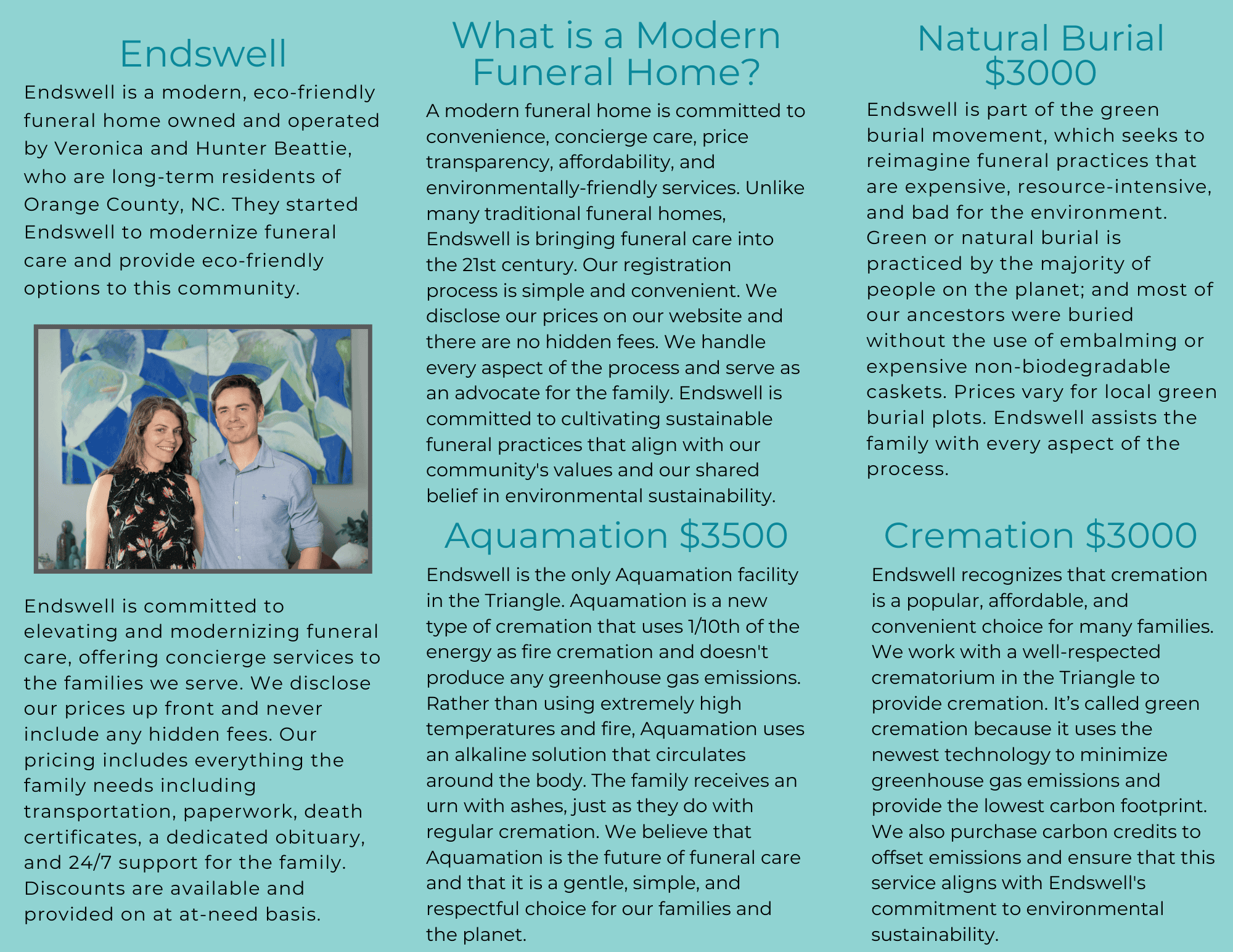
Planning Ahead / Advanced Planning
Advanced planning can provide peace of mind for you and your family. Anyone can create a plan for after-life care at any stage of their life. When you plan ahead, you can prepare for every outcome, discuss your wishes openly, and create a plan based on your needs.
How You Can Plan Ahead
- Choose what you want to happen to your body: aquamation, cremation, green burial, or burial with embalming.
- Notify your family of your choices as well as what actions to perform after your death.
- Choose who you want to work with (Endswell or another funeral home).
- Consider a plan for a memorial service.
- Gather information for your obituary.
- Get organized: (Consider pets, pending financial matters, and any unfinished business).
After-Life Wishes
Consider writing down or discussing your after-life wishes with friends and family. How would you like your life to be celebrated, honored, and remembered? This may include photo albums, legacy projects, exit parties, celebrations of life, and funeral and memorial planning.
Mental Health
Consider talking to a professional about how you feel. This time in your life can feel overwhelming. Resources include social workers, religious and spiritual groups, psychiatrists, group therapy, books, and online resources.
Legal and Financial Matters
Legal considerations include:
- advanced directives
- last wills and testaments
- estate planning
- power of attorney
- bank accounts
- life insurance
- and much more…
Don’t hesitate to contact an attorney or a CPA for legal and financial questions.
Practical Matters
Downsizing, plans for pets, digital accounts, and end-of-life housing arrangements are all important considerations for you and your family.
Comprehensive Planning Checklist
- Please visit our End-of-Life Planning page to review what your family will need to do after your death.
- Contact Endswell anytime to answer questions and help you with advanced planning.
- “End-of-Life Planning Checklist: A Guide to the 12 Documents You Should Consider” Freewill
Planning Now / Immediate Need / End-of-Life Planning
Endswell is here to answer any questions you have about end-of-life planning. For immediate needs, please contact us anytime to make arrangements or inquire about our services.
The following resources are for individuals and families who need to plan for imminent death.
Hospice
Hospice focuses on the palliative care of terminally ill patients. LEARN MORE If you or your loved one is in need of hospice care, please consider contacting one of the local organizations listed below. Note that all hospices also have bereavement services available to the public.
LOCAL HOSPICES
The following resources and articles can help answer questions about what to do when a loved one dies.
Considering your options for environmentally friendly final disposition
-
AQUAMATION
GREEN BURIAL
Death Awareness and Death Positivity Resources
Life Celebrants and Death Doulas
-
Life Celebrants and Death Douals are available both before and after death. They assist with vigils, rituals, celebrations, and they provide support for individuals and families the end of life and at the beginning of the grieving process.
Grief and Family Resources
- Hospice is one of the best resources for grief support.
- For support groups, we recommend Griefshare.
What Is the Five Wishes Document?
Five Wishes is an advanced directive (or living will) created by the non-profit organization Aging with Dignity. It helps you express how you want to be cared for if you become seriously ill and are unable to speak for yourself. It is recognized as a legal document in most U.S. states once it is signed and witnessed.
While traditional health care directives often focus on medical treatments alone, Five Wishes addresses emotional, spiritual, and personal aspects of care as well. It’s written in plain language and can serve as both a legal and personal expression of your wishes.
Why Is It Important?
- Holistic Approach
- Unlike some living wills that only cover medical interventions, Five Wishes also gives you the ability to state comfort, caregiving, and personal preferences.
- Easily Understood
- Written in clear, everyday language, Five Wishes aims to make advanced planning more accessible.
- Legally Binding in Most States
- Once signed, dated, and properly witnessed (and notarized in some states), it meets the legal requirements of the majority of states—though it’s always good to verify state-specific rules.
- Guidance for Loved Ones
- In times of medical crisis, your family or appointed decision-makers do not have to wonder what you would want—they can rely on your written instructions.
The Five Wishes at a Glance
Five Wishes addresses five key areas of care and comfort:
- Wish 1: The Person I Want to Make Care Decisions for Me When I Can’t
- You choose a health care agent (health care proxy) who can speak with doctors, consent to or refuse treatments, and ensure medical staff follow your preferences.
- Wish 2: The Kind of Medical Treatment I Want or Don’t Want
- Here you specify which life-sustaining measures you would or would not want if you are seriously ill or in a coma (e.g., CPR, mechanical ventilation, tube feeding, etc.).
- Wish 3: How Comfortable I Want to Be
- This section covers pain management, personal grooming, and other measures that would keep you as comfortable as possible if you cannot communicate.
- Wish 4: How I Want People to Treat Me
- In addition to purely medical concerns, you can express wishes regarding visitation, spiritual support, privacy, and personal care preferences.
- Wish 5: What I Want My Loved Ones to Know
- This final wish deals with emotional and spiritual matters, such as messages to family and friends, funeral instructions, and anything else you want people to understand about your feelings or beliefs.
How to Complete Your Five Wishes Document
- Obtain the Official Form
- You can purchase or download Five Wishes directly from Aging with Dignity (visit https://fivewishes.org) or call them at (888) 5-WISHES.
- Each physical copy has a unique license; filling out photocopies or old versions may not be valid in some states.
- Fees are typically modest (often just a few dollars), and bulk discounts are sometimes available for organizations.
- Fill It Out
- Read each wish carefully and make decisions that reflect your beliefs, values, and medical preferences.
- Use clear, specific language to avoid ambiguity.
- Sign & Witness
- Ensure you sign in the presence of witnesses according to the legal requirements of your state.
- Some states require notarization as well, so check your local laws or consult an attorney if you’re unsure.
- Share Your Wishes
- Give copies of your completed and signed Five Wishes document to your chosen health care agent, loved ones, your primary physician, and anyone else involved in your care.
- Keep the original in a place that is easy to locate, and let people know where it is.
- Review & Update
- Life circumstances (e.g., moving to another state, marriage, divorce, change in health status) can affect your advanced directive.
- Revisit your Five Wishes periodically and revise if necessary.
- If you do create a new version, ensure you destroy outdated copies and redistribute the updated version to relevant parties.
Frequently Asked Questions
1. Is Five Wishes legally recognized in my state?
It’s recognized in most states once properly completed, but some states have their own statutory forms. If you live in a state that doesn’t recognize Five Wishes automatically, you can often attach it to your state’s official advance directive form for more comprehensive coverage.
2. Do I need a lawyer to fill out Five Wishes?
You generally do not need a lawyer. However, if you have concerns about how this document aligns with your estate planning or local laws, consulting an attorney can be helpful.
3. Is it necessary to notarize my Five Wishes document?
This depends on the laws of your state. Five Wishes includes instructions about which states require notarization.
4. Can I make changes after it’s signed?
Yes. You can update it at any time by creating a new, dated version. Make sure to discard previous versions and share the updated document with everyone who should have it.
5. How is Five Wishes different from a Living Will or Power of Attorney for Health Care?
Five Wishes serves as a type of living will combined with a health care power of attorney, but it also covers personal, emotional, and spiritual matters—making it more holistic than many standard documents.