
When it comes to making end-of-life choices, many families today seek options that align with their values—especially those who prioritize environmental responsibility. Alkaline hydrolysis, also known as aquamation, offers a gentle, water-based alternative to traditional burial and fire cremation.
This innovative process not only reduces environmental impact but also provides families with more remains while eliminating harmful emissions.
But what exactly is alkaline hydrolysis? How does it work, and why are more people choosing it? In this comprehensive guide, we’ll explore the history, process, and benefits of aquamation, answering common questions along the way.
Whether you’re considering this option for yourself or a loved one, understanding how it works can help you make an informed decision about your final arrangements.
What Is Alkaline Hydrolysis?
Alkaline hydrolysis, also known as aquamation, water cremation, biocremation™, flameless cremation, or Resomation™, is an eco-friendly alternative to traditional cremation and burial. This innovative process uses water, alkaline chemicals, heat, and sometimes pressure and agitation to accelerate natural decomposition.
Sounds strange? Most consider this a gentler process than fire cremation when they compare the two processes. Alkaline Hydrolysis uses much lower temperatures, returns more bone remains, and avoids cross-contamination with other ashes.
The result? Pure white bone fragments and a sterile liquid effluent containing salts, amino acids, peptides, and sugars—free from DNA and other organic materials. Unlike flame cremation, which releases carbon dioxide and pollutants into the air, alkaline hydrolysis produces zero emissions, making it the most sustainable disposition method available today.
As more states approve alkaline hydrolysis for human disposition, interest in this process continues to grow. But where did alkaline hydrolysis come from? Who invented it, and why? Let’s explore its fascinating history.
The Origins of Alkaline Hydrolysis: A 19th-Century Invention
Many assume alkaline hydrolysis is a new technology, but the truth is that it was first patented in 1888 by Amos Herbert Hanson, a British-born farmer who immigrated to the United States.
The Farmer Who Pioneered Alkaline Hydrolysis
During the late 19th century, farmers sought innovative ways to convert animal remains into fertilizer. Alkaline hydrolysis was originally used to break down livestock bones and extract nutrients. Hanson recognized the potential of this process for full-body decomposition and meticulously documented its application.
He was granted U.S. Patent No. 394,982 for his alkaline hydrolysis method in 1888, making him the first person to formally introduce the concept. However, it would take over a century before the process was adapted for human disposition.
Modern Development: The Scientists Who Brought Alkaline Hydrolysis to the Funeral Industry
The First Modern Alkaline Hydrolysis Machines
In the 1990s, Dr. Gordon I. Kaye and Dr. Peter B. Weber sought a safer way to dispose of radioactive laboratory animals. They discovered that alkaline hydrolysis could effectively break down biological tissue while neutralizing pathogens and toxic materials.
In 1994, they patented the first modern alkaline hydrolysis system (U.S. Patent No. 5,332,532) and launched WR2, a company specializing in alkaline hydrolysis equipment.
From Medical Research to Human Disposition
The first commercial alkaline hydrolysis system for humans was installed at Shands Hospital at the University of Florida. It was used for medical cadavers donated to science.
By the early 2000s, researchers confirmed that alkaline hydrolysis was not only safe but superior to flame cremation in many ways:
- It eliminates pathogens, biological toxins, and hazardous waste.
- The effluent is sterile and contains no human remains.
- The process is energy-efficient, using 90% less energy than flame cremation.
With growing awareness of its benefits, alkaline hydrolysis was introduced to the funeral industry in 2011—first in Ohio and Florida. Since then, the process has been gradually legalized across the U.S. and Canada.
How Alkaline Hydrolysis Works
Alkaline hydrolysis mimics the natural decomposition process, but it occurs in hours instead of years. While cremation takes about 2 hours, Aquamation or Alkaline Hydrolysis takes 4-6 hours because it uses and relies on water, gradually circulating around the body, rather than the 1800-degree temperatures in fire cremation.
Step-by-Step Process
- Preparation – The deceased is placed in an airtight, stainless steel chamber.
- Filling the Chamber – The machine is filled with a solution of 95% water and 5% alkali (potassium hydroxide or sodium hydroxide).
- Breakdown of Tissue – The solution is heated between 199–302°F (93–150°C). Some systems use pressure and gentle agitation to enhance the process.
- Sterile Effluent Formation – Over 3 to 16 hours, all organic material breaks down, leaving behind bone fragments and a solution of amino acids.
- Processing the Remains – The bones are dried and reduced to ashes, which are then placed in an urn for the family.
- Effluent Disposal – The sterile liquid is safely discharged into the wastewater system, where it helps clean municipal water due to its high pH. The nutrients return to the ecosystem instead of entering the atmosphere in the form of soot like they do with fire cremation.
Aquamation is becoming more widely available, but not all funeral homes offer it. At Endswell Funeral Home, we are proud to bring this innovative and sustainable option to families in North Carolina.
If you are ready to learn more or wish to make arrangements, call us at 919-907-9777.
What Remains After the Process?
- Pure white bone fragments: Same as cremation, but much lighter in color, because they haven’t been charred from fire cremation.
- Sterile liquid effluent containing salts, amino acids, and sugars—but no DNA
Environmental Benefits of Alkaline Hydrolysis
Compared to traditional burial and flame cremation, alkaline hydrolysis is the most eco-friendly option:
✔ Uses 90% less energy than flame cremation
✔ Eliminates direct emissions of carbon dioxide and mercury
✔ Nutrients returned to the ecosystem
✔ Produces 32% more remains than flame cremation
This gentle, water-based process aligns with growing consumer demand for sustainable death care.
Why Do People Choose Alkaline Hydrolysis?
Families choose alkaline hydrolysis over traditional cremation and burial for several reasons:
???? It’s gentle – Many prefer water-based decomposition over fire.
???? It’s eco-friendly – The process has a much lower carbon footprint.
???? More remains are returned – Families receive more ashes.
???? It’s safer – No emissions, no exposure to flame, and no airborne pollutants.
???? It’s an innovative alternative – Some view it as the future of funeral care.
Legal Status of Alkaline Hydrolysis in the U.S. and Canada
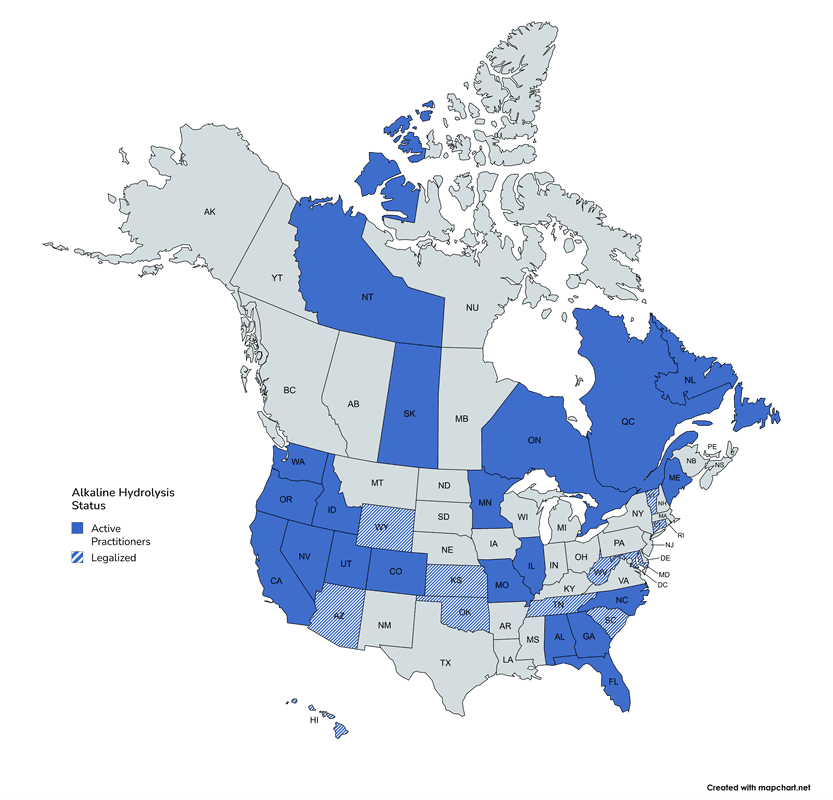
As of 2024, more than half of U.S. states have legalized alkaline hydrolysis for human disposition, and several others have pending legislation.
However, availability varies—some states have legalized the process but do not have operating providers.
???? To find a provider, search for “Aquamation” or “Alkaline Hydrolysis” in your state.
???? In states where it’s not available, families can transport remains to a provider in a neighboring state.
Frequently Asked Questions (FAQs)
Is Alkaline Hydrolysis Safe for the Environment?
Yes! The process does not release carbon emissions or toxic pollutants. The sterile effluent is safely treated in wastewater facilities and even benefits the water system.
Does Alkaline Hydrolysis Use Acid?
No, the process uses a base, not an acid. Potassium hydroxide, which is widely used in soap-making and other industries, is used to create the alkaline solution.
Can I Still Have a Traditional Memorial Service?
Absolutely! Families can hold a funeral, memorial, or celebration of life before or after the aquamation process.
Where Is Alkaline Hydrolysis Available?
Laws vary by state and province. Currently alkaline hydrolysis is legal in: Alabama, Arizona, California, Colorado, Connecticut, Florida, Georgia, Hawaii, Idaho, Illinois, Kansas, Maine, Maryland, Michigan, Minnesota, Missouri, Nevada, North Carolina, North Dakota, Oklahoma, Oregon, Tennessee, Utah, Vermont, Virginia, Washington, West Virginia, Wyoming.
How Much Does Alkaline Hydrolysis Cost?
Pricing varies, but it is comparable to flame cremation. Many providers offer packages similar to traditional cremation services.
The Future of Alkaline Hydrolysis
With growing demand for green funeral options, alkaline hydrolysis is poised to become the standard for cremation. As more states approve the process, accessibility will continue to expand, making this gentle, sustainable form of disposition available to all.
Is Alkaline Hydrolysis Right for You?
If you value eco-conscious end-of-life choices, prefer a gentle process, and want a lower environmental impact, alkaline hydrolysis may be the ideal option.
For more information, contact your local funeral home or an aquamation provider today.
Endswell Offers Eco-Friendly Options
A Gentle Alternative to Cremation
At Endswell Funeral Home, we understand how important it is to choose a farewell that reflects your values. If you want a process that is both gentle and environmentally responsible, aquamation may be the right choice.
What Makes Aquamation Different?
Unlike flame cremation, aquamation uses water instead of fire to return the body to its natural elements. This process:
- Uses 90% less energy than traditional cremation
- Produces no harmful emissions or airborne pollutants
- Returns more remains to the family
- Provides a peaceful and respectful alternative
Why Choose Aquamation?
Many families choose aquamation because it aligns with their values. You may find it comforting to know:
- It is one of the most eco-friendly disposition method available
- There is no exposure to flames, making it a gentler process
- It produces more remains than flame cremation, giving you more to keep or scatter
- The process eliminates harmful pathogens and does not contribute to pollution
Endswell’s Aquamation Services
Our aquamation package includes everything needed to ensure a smooth and respectful process:
- Transportation of your loved one into our care
- Completion of all necessary paperwork
- The aquamation process itself
- Return of the remains in an eco-friendly urn
We handle every detail so you can focus on honoring your loved one.
Make an Informed Choice
Aquamation is becoming more widely available, but not all funeral homes offer it. At Endswell Funeral Home, we are proud to bring this innovative and sustainable option to families in North Carolina.
If you are ready to learn more or wish to make arrangements, call us at 919-907-9777.
0 Comments